Nostalgic Words: Crafting Timeless Design
If you've ever held a handwritten letter from a grandparent or admired the elegant cursive on a vintage wedding invitation, you understand the emotional weight of penmanship. In a digital age dominated by geometric sans serifs and rigid grids, there is a growing hunger for human touch. This is where Nostalgic Words enters the conversation. It isn't just another script font; it is a carefully constructed vintage typeface that mimics the fluid, imperfect beauty of manual handwriting. For designers, entrepreneurs, and creators, this typeface offers a bridge between modern functionality and old-world charm.
The Anatomy of a Vintage Signature
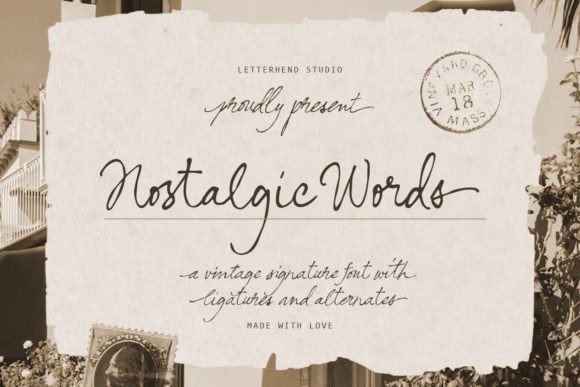
Understanding the visual DNA of Nostalgic Words is key to using it effectively. At its core, this is a display typeface. It is not designed for long blocks of body text, but rather to make a statement in headlines, logos, and hero sections. The strokes feature a natural variation in thickness, simulating the pressure a hand applies to a pen or brush. This gives the letters a rhythmic, organic flow that feels lived-in and authentic.
One of the standout technical features of this premium font is its extensive library of ligatures and alternates. In typography, a ligature occurs when two or more letters are joined to form a single unit (like "fl" or "th"), but in script fonts, these connections are vital for realism. Nostalgic Words includes contextual alternates that swap out letters depending on their neighbors, preventing the "cookie-cutter" repetition that plagues lesser typefaces. The result is a handwritten font that looks genuinely custom, as though a calligrapher sat down and wrote your specific headline by hand.
Strategic Applications: Where Vintage Meets Modern
The versatility of Nostalgic Words allows it to shine across a spectrum of projects. However, its personality dictates where it should be used to maximize impact.
Branding and Logo Design
For logo design, this typeface is a powerhouse. It is particularly effective for brands that want to convey heritage, craftsmanship, or intimacy. Imagine a boutique coffee roaster, a high-end leather goods maker, or a bespoke tailor. Using Nostalgic Words in their brand identity immediately communicates a commitment to tradition and quality. It suggests that the business values the "slow" approach over mass production. However, legibility is paramount in logos. When using this script font, ensure the letter spacing (tracking) is sufficient so that the distinct characters don't blur into one another at smaller sizes.
Editorial and Publishing
In editorial design, such as magazines and books, this typeface works beautifully as a contrasting element. A common technique in modern layout is to pair a rigid, functional sans serif font for body copy with a dynamic script for pull quotes or chapter titles. Nostalgic Words provides that necessary visual break, guiding the reader’s eye and adding emotional weight to specific sections. It adds a layer of sophistication that standard serif fonts sometimes lack.
Packaging and Stationery
The physical application of Nostalgic Words is where it truly excels. In packaging design, texture is everything. This typeface looks stunning on cardboard, textured paper, and even embossed on foil. It is ideal for artisanal food labels, cosmetics, and fashion hangtags. Furthermore, for stationery, greeting cards, and wedding invitations, the font serves as a digital substitute for hand-lettering, offering the elegance of calligraphy with the precision of vector text.
Mastering the Pairing and Hierarchy
Using a creative font like Nostalgic Words requires a strategic approach to font pairing. Because it is a high-contrast, decorative display font, it demands a neutral partner. Do not pair it with another expressive or handwritten font; this will create visual chaos.
Instead, look for a clean, geometric sans serif font or a sturdy, transitional serif font. The neutrality of the body text will allow the personality of Nostalgic Words to pop without overwhelming the reader. For example, pairing it with a font like Montserrat or Open Sans creates a classic "Old meets New" aesthetic. This contrast establishes a clear visual hierarchy, signaling to the audience which information is the emotional hook (the headline) and which is the functional data (the body copy).
Technical Considerations for Professionals
Before integrating Nostalgic Words into your workflow, it is essential to review the technical assets. As a premium font, it likely comes with specific licensing for commercial use. Always verify that your license covers your intended output, whether it is web design, social media graphics, or physical merchandise.
Additionally, explore the OpenType features in your design software. Toggling on "Standard Ligatures" and "Contextual Alternates" in Adobe Illustrator or Photoshop is usually required to activate the full potential of the typeface. Without these features enabled, the text may look rigid. When applying the font to web design, ensure that the file formats (WOFF/WOFF2) are optimized for fast loading times, as script fonts can sometimes carry heavier file weights than standard text fonts.
Testing for Readability
While Nostalgic Words is a beautiful display font, it requires testing for readability across different mediums. A script that looks legible on a 27-inch monitor might become unreadable on a mobile screen or a small product label. Always conduct a "squint test"—if you squint at the text and it turns into a gray blur, the size is too small. This typeface is best reserved for headers, titles, and large call-outs where its intricate details can be appreciated.
Elevating the Audience Experience
Ultimately, the goal of using a typeface like Nostalgic Words is to influence brand perception. Typography is a silent ambassador for your brand. By choosing a vintage, handwritten style, you are telling your audience that you care about details, that you appreciate history, and that you offer a personal touch. Whether you are a blogger designing a header image, a small business owner creating packaging, or a marketer crafting an email campaign, this typeface adds a layer of professionalism