Lonthe: A Modern Script Font for Authentic Branding
The Balance of Handwritten Charm and Professional Polish
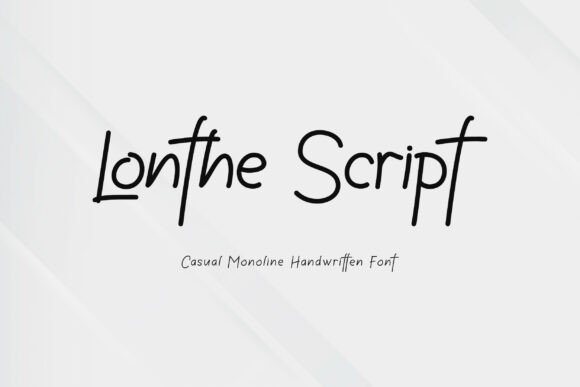
Finding a script font that feels genuine without looking messy is a common challenge. Many handwritten typefaces lean too casual, sacrificing the clean lines needed for professional applications. Lonthe strikes a different balance. It is a clean, elegant monoline script designed to inject a natural, human feel into modern projects while maintaining a sharp, premium aesthetic. The strokes are smooth and consistent, creating a flow that feels personal but never sloppy. For designers and business owners, this typeface offers the warmth of a handwritten note combined with the reliability of a structured display font. It avoids the exaggerated loops and chaotic baselines often found in casual scripts, making it a versatile tool for serious brand identity work.
Where Lonthe Shines: Applications and Visual Hierarchy
The true test of any creative font is its adaptability across different mediums. Lonthe proves its worth in environments where personality and clarity must coexist. In logo design, it provides an instant signature look. Because it is a monoline font, it scales well, ensuring that a logo remains legible whether it is embroidered on a polo shirt or displayed on a website header. It pairs exceptionally well with geometric sans serif fonts for contrast or a classic serif font for a more editorial, high-fashion vibe.
Beyond logos, the font excels in packaging design. Imagine a coffee bag, a scented candle, or a skincare bottle; the Lonthe typeface adds an artisanal touch that suggests the product was crafted with care. It works beautifully for headers in editorial design, adding a conversational tone to magazine layouts or blog post graphics. For social media graphics, where grabbing attention is vital, the font’s elegant flow guides the eye, creating a strong visual hierarchy that anchors the message. It moves beyond simple decoration to become a functional element of web design and print layouts, ensuring that headers are engaging without overwhelming the body text.
Practical Guidance for Implementation
When integrating Lonthe into your workflow, the goal is to let the font breathe. Because it is a display font, it is best suited for headlines, sub-headers, and pull quotes rather than long paragraphs of body copy. Using it for short, impactful sentences allows the smooth strokes to shine without causing reader fatigue.
Consider the context of your brand identity. If you are building a beauty brand or a lifestyle product, Lonthe offers the sophistication needed to look established. However, for a tech startup, you might use it sparingly to soften an otherwise rigid interface. A key part of using premium fonts effectively is understanding the licensing and technical specifications. Always review the included styles and character sets to ensure they support your specific language needs. Testing font pairing is also crucial; place Lonthe next to your secondary typeface to check the x-height alignment and weight contrast. The goal is a cohesive look where the handwritten elements feel intentional, not forced.
For those evaluating design assets, look at how the font renders on different screens. A high-quality commercial font like Lonthe should maintain its smooth curves in both vector formats and high-resolution screens. Whether you are a crafter designing a wedding invitation or a marketer creating a digital ad, the font’s ability to convey a warm, human message while retaining a professional edge makes it a valuable addition to any typographic toolkit.