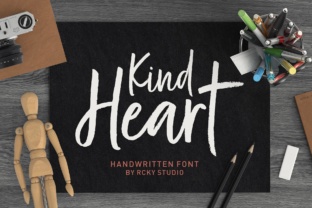
Happyday: A Modern Script Font for Elegant Design
Finding a script font that feels both personal and polished can be a real challenge. Too many options look either too casual or too stiff, failing to capture that authentic, flowing quality you envision. That’s where a typeface like Happyday enters the picture. It’s not just another handwritten font; it’s a carefully crafted tool designed to bring a sense of natural elegance and sophisticated movement to your work.
The Personality and Flow of Happyday
At its core, Happyday is a modern handwritten script font characterized by its beautifully flowing letterforms. Imagine the confident, graceful strokes of a high-end signature—smooth, generous curves that connect seamlessly, creating a sense of effortless continuity. The strokes are elongated and graceful, giving the typeface a sophisticated, signature look that feels both luxurious and approachable.
This isn't a font that shouts for attention with quirky, disconnected letters. Instead, it whispers with confidence. Its personality is one of refined luxury, making it a perfect companion for projects that require a sweeping, authentic touch. The visual rhythm is key; it guides the eye naturally from one letter to the next, which is a hallmark of a well-designed premium font. For designers, this inherent flow means less time manually adjusting kerning and more time focusing on the overall composition.
Where Happyday Truly Shines: Practical Applications
Understanding a font's strengths is about seeing it in action. Happyday excels in contexts where a human touch and a sense of quality are paramount. Think beyond the obvious wedding invitation, though it is certainly a star there. Consider these real-world applications:
- Personal Branding & Logo Design: For entrepreneurs, coaches, or artists, a logo sets the first impression. Happyday, used as a primary logotype or within a lockup, can instantly communicate a brand’s personal, artisanal, or luxury values. It works exceptionally well for photographers, boutique studios, and lifestyle brands seeking a signature aesthetic.
- Editorial & Packaging Design: In a magazine layout or on product packaging, this script font can be used for pull quotes, section headers, or product names to draw the reader’s eye and add a layer of curated elegance. It pairs beautifully with a clean sans serif font for body copy, creating a dynamic and professional typographic hierarchy.
- Digital Presence & Social Media Graphics: On a website, use Happyday for a hero section headline to set an immediate tone of sophistication. For social media, it’s invaluable for creating consistent, branded graphics for quotes, announcements, and story highlights that stand out in a crowded feed. Its clarity ensures it remains impactful even at smaller sizes on mobile screens.
- Stationery & Craft Projects: For small business owners creating thank-you cards, or crafters designing custom labels, this creative font adds a professional, handcrafted feel that elevates the entire product. It transforms simple stationery into a memorable brand touchpoint.
Making Informed Design Choices with a Script Typeface
Choosing a font like Happyday for your project is a strategic decision. Here’s how to approach it thoughtfully to ensure it strengthens your design rather than complicates it.
Evaluating Project Fit and Readability
First, assess the project’s primary goal. Is it to convey warmth and authenticity? Or is it about luxury and exclusivity? Happyday leans toward the latter but maintains a friendly accessibility. Its main strength is in display contexts—headlines, logos, short phrases. For body text or long paragraphs, always pair it with a highly legible serif or sans serif font. This contrast is not just aesthetic; it’s functional, ensuring your message is both beautiful and easy to consume.
Testing Font Pairings and Exploring Styles
A great script font rarely works in isolation. Experiment with pairing Happyday with complementary typefaces. A geometric sans serif can create a clean, modern contrast, while a classic serif can bridge the gap between contemporary and traditional. Look at the font family itself. Does it include alternate characters, ligatures, or stylistic sets? These features are gold for customization, allowing you to fine-tune the look for a specific headline or brand name, ensuring uniqueness.
Understanding Licensing and Consistency
For any commercial font, reviewing the licensing is non-negotiable. Confirm that the license covers your intended use, whether it’s for a client’s logo, printed merchandise, or a website. Once you’ve integrated Happyday into your brand identity, use it consistently. Define clear guidelines for where and how it should be used—perhaps only for primary headlines and logos—to build strong brand recognition. This consistency across your website, social media graphics, and printed materials is what transforms a nice font into a core component of your brand identity.
In the landscape of modern typography, a font like Happyday serves a specific and valuable purpose. It’s a design asset that brings warmth, movement, and a signature quality to projects across the creative spectrum. By understanding its visual character and applying it with intention, you can leverage this typeface to create designs that feel both personally crafted and professionally executed.