Why Lovely Flowers is the Script Font Your Projects Actually Need
There’s a particular kind of frustration every designer and creative professional knows well. You’ve got a solid concept, a clear message, and a brand that’s ready to connect with its audience. But the typography feels… off. Too rigid, too playful, or lacking that distinct character that makes a design feel complete. This is where a well-crafted script font enters the conversation. Not just any script, but one that balances personality with purpose. Lovely Flowers is precisely that typeface—a relaxed, cursive script designed to bring organic elegance to your work without overwhelming it.
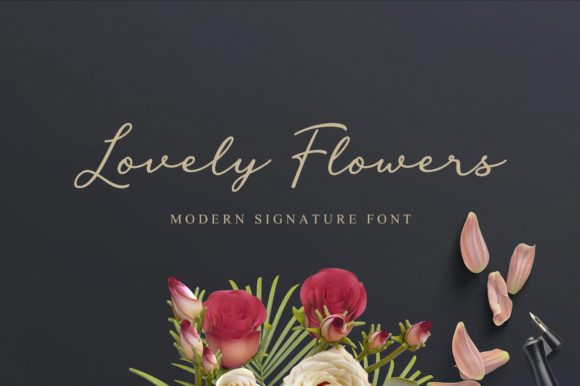
Let’s talk about what makes it visually distinct. Lovely Flowers isn’t a thin, delicate calligraphy that risks disappearing on screen, nor is it a bold, heavy-handed script that dominates a layout. It sits in a thoughtful middle ground. The strokes have a natural, handwritten flow with varied thickness, giving it movement and a personal touch. The letterforms connect in a way that feels fluid, not forced, creating a rhythm that guides the eye gently across a line of text. This isn’t a font for setting a 500-word article, but for pulling out a key phrase, a headline, or a call to action. It’s a display font at heart, meant to be seen and to make an impression.
Where This Creative Font Truly Shines
Understanding a font’s ideal application is half the battle. Lovely Flowers excels in projects where warmth, approachability, and a touch of handmade charm are assets. Think beyond the obvious wedding invitation. Consider a brand identity for a boutique bakery, a floral studio, or a artisan skincare line. Used for the logotype, it immediately communicates a story of care and craftsmanship. In packaging design, it can elevate a product label, making it feel premium and personal on a crowded shelf.
For digital spaces, its role is specific but powerful. It’s not your primary web design font for body copy—readability on screens demands a more straightforward sans serif font or serif font. However, used strategically for hero section headings, pull quotes, or promotional banners, it adds a human element that sterile digital layouts often lack. In social media graphics, it’s a standout for Instagram stories, quote cards, and sale announcements, helping posts feel less corporate and more conversational. For editorial design, like a magazine feature or a book cover, it can contribute to a thematic aesthetic, especially in lifestyle, romance, or nature-focused publications.
Making It Work: Practical Guidance for Your Projects
Choosing a premium font like Lovely Flowers is an investment, so let’s talk about integration. First, evaluate the project’s tone. Does your brand or client lean toward elegance with a soft edge, or is it bold and modern? This font’s personality is graceful and relaxed, so it pairs best with brands that want to feel authentic and inviting. For logo design, test it at various sizes. Does the wordmark remain legible and impactful when scaled down for a favicon or embroidered on a shirt?
Next, master the font pairing. A script font needs a partner that provides contrast and stability. Pair Lovely Flowers with a clean, geometric sans serif font like Montserrat or Lato for body text. This combination offers visual hierarchy: the script draws attention, while the sans serif delivers information clearly. Alternatively, pair it with a classic, readable serif font like Georgia or a modern serif like Playfair Display for a more traditional yet sophisticated feel. The key is balance—the supporting font should be simple enough not to compete.
One of its most practical features is its PUA encoding. This means every glyph, swash, and alternate character is accessible without special design software. For a small business owner creating their own marketing materials in Canva or for a crafter using a cutting machine, this is a game-changer. You can easily access the full character set to add flourishes and customize your designs, turning standard text into something special. Always review the full font package to see what stylistic sets are available; these alternates can help you tailor the letterforms to better fit your specific layout.
Finally, consider the licensing. As a commercial font, ensure the license you purchase covers your intended use—whether it’s for a client’s logo, merchandise for sale, or digital products. Most reputable foundries offer clear tiers. Investing in the proper license is not just about legality; it’s about respecting the craft that went into creating the design assets you rely on.
In a landscape saturated with typefaces, Lovely Flowers offers a focused solution. It’s a handwritten font with the refinement of a modern typography tool. It won’t solve every design challenge, but for the right project, it provides that missing layer of personality and polish. It’s about choosing a typeface that doesn’t just display words, but helps tell the story behind them.