Moria: Celtic Script Font from Middle-Earth
Why This Elven-Inspired Typeface Feels Different
You've probably seen hundreds of script fonts floating around the internet. Most of them look like someone grabbed a calligraphy pen, wrote a few words, and called it a day. Moria isn't that kind of font. This typeface carries weight—not in thickness, but in heritage. It's a Celtic script-style font that channels the elegance of elven craftsmanship from Middle-Earth, and it brings something genuinely distinctive to any project lucky enough to use it.
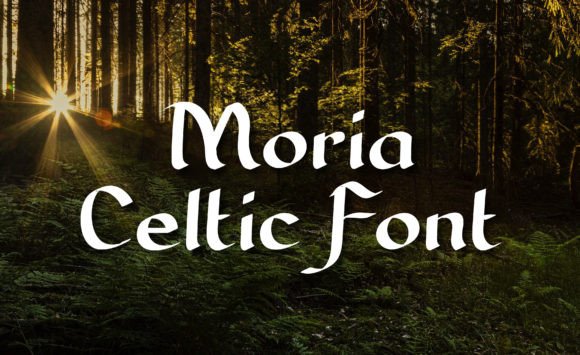
The moment you type with Moria, you'll notice something shift. The letterforms flow with an organic rhythm that feels handwritten yet deliberate, like a scribe who spent decades perfecting each stroke. There's a graceful tension in the curves—fluid but controlled, decorative but never cluttered. The Celtic influences show up in subtle ways: the way certain strokes taper and loop, the slight ornamental flourishes that appear without overwhelming the overall readability. It's the kind of premium font that makes people pause and actually read what's in front of them.
What sets Moria apart from other script fonts is its personality. It doesn't try to be casual or trendy. Instead, it leans into a timeless quality that feels rooted in storytelling and tradition. If you've ever held an old leather-bound book or studied illuminated manuscripts, Moria taps into that same emotional register. It whispers of ancient forests, hidden kingdoms, and carefully preserved knowledge. That's not an accident—it's the DNA of the typeface itself.
Where Moria Truly Shines
Let's talk about practical applications, because a beautiful font only matters if it actually works in the real world. Moria excels in projects where you want to evoke heritage, fantasy, elegance, or a sense of the mystical. Game developers working on RPGs, adventure titles, or narrative-driven experiences will find this font practically tailor-made for their needs. Think title screens, chapter headings, in-game signage, quest descriptions, and collector's edition packaging. Moria doesn't just sit on the surface—it pulls players deeper into the world you've built.
Beyond gaming, this typeface has serious legs in publishing and editorial design. Fantasy novel covers, chapter openers, and special edition typography all benefit from Moria's distinctive character. If you're an indie author or a small publisher working on fiction that leans into mythology, folklore, or epic storytelling, this font gives your covers and interior pages an immediate sense of gravitas. Pair it with a clean serif font for body text, and you've got a reading experience that feels cohesive and intentional.
Branding is another area where Moria can do remarkable work. Craft breweries, medieval-themed restaurants, Renaissance faire vendors, artisan candle makers, and heritage-focused small businesses often struggle to find typography that matches their identity without looking gimmicky. Moria threads that needle beautifully. It's decorative enough to feel special but structured enough to remain professional. Used in logo design, it communicates authenticity and craftsmanship without a single word of copy. On packaging design—from bottles to boxes to gift tags—it adds a tactile, handcrafted quality that modern typography often misses.
Social media graphics and digital content creators shouldn't overlook this font either. In a landscape flooded with generic sans serif font choices and overused handwritten font options, Moria cuts through the noise. Quote graphics, podcast artwork, YouTube thumbnails for fantasy content, and even wedding invitations benefit from its distinctive presence. The key is using it strategically—Moria works best as a display font, not for paragraphs of body copy. Let it headline. Let it announce. Let it set the mood.
How Typography Like Moria Shapes Perception
Here's something many people underestimate: the fonts you choose directly influence how audiences perceive your brand, your message, and your credibility. Typography isn't decoration—it's communication. When someone encounters Moria on a product, a website, or a piece of marketing material, their brain immediately starts forming associations. Celtic heritage. Craftsmanship. Imagination. Attention to detail. Those associations aren't random; they're the result of centuries of visual culture encoded in letterforms.
This is where visual hierarchy becomes critical. Moria naturally commands attention because of its ornamental qualities. That makes it powerful for headings, titles, and focal points, but it also means you need to be thoughtful about balance. If every element on your page uses Moria, the effect becomes overwhelming and readability drops fast. The smartest designers use it as the centerpiece and surround it with something more restrained—a geometric sans serif font for supporting text, perhaps, or a classic serif font for longer passages. That contrast creates rhythm and guides the reader's eye exactly where you want it.
Brand consistency matters too. If you're building an identity around heritage, fantasy, or artisanal values, Moria can become a cornerstone of your visual language. Use it across your web design, your print materials, your social media graphics, and your packaging. Over time, that consistent typographic choice builds recognition. People start associating that distinctive Celtic script style with your specific brand, and that kind of recognition is worth more than any ad campaign.
Working with Moria: Practical Considerations
Before you commit to any creative font for a project, test it thoroughly. Type out the specific words and phrases you'll actually use. Check how Moria handles your brand name, your tagline, your key headings. Look at letter spacing, kerning, and how characters interact with each other. Some script fonts fall apart with certain letter combinations—Moria holds up well, but every project has its own demands.
Font pairing deserves real attention. Moria has enough personality to anchor a design, so your supporting typeface should complement rather than compete. Clean, geometric sans serif fonts work well for body copy and secondary information. Traditional serif font options can create an interesting tension that feels both classic and layered. Avoid pairing Moria with other decorative or handwritten font choices—that path leads to visual chaos and weakened readability.
Check what's included with your license. Commercial font purchases typically cover different use cases—desktop, web, app, and sometimes server installations. Make sure the licensing matches your actual needs, especially if you're a small business owner planning to use the typeface across multiple channels. Understanding these details upfront saves headaches later and ensures you're using the font legally and professionally.
Readability at smaller sizes is worth evaluating honestly. Moria performs best at larger display sizes where its Celtic-inspired details can breathe and register clearly. At very small sizes—think fine print, legal text, or dense UI elements—the ornamental qualities may become muddy. Know where this font's strengths lie and deploy it accordingly. Every design asset has its ideal context, and Moria is no exception.
Bringing It All Together
Finding the right typeface for a project often feels like searching for something you can't quite name. You know when it's wrong—something feels generic, forgettable, or disconnected from the story you're trying to tell. Moria solves that problem for a specific and surprisingly wide range of projects. Whether you're designing a fantasy game interface, crafting a brand identity for a heritage-focused business, laying out a novel cover, or creating social media content that actually stops the scroll, this Celtic script-style font brings something that most modern typography simply doesn't offer.
The elves of Middle-Earth were craftspeople who poured intention into every detail. Moria carries that same philosophy into your design work. It's not just another script font sitting in your collection—it's a design decision that communicates care, imagination, and respect for the craft. Use it thoughtfully, pair it wisely, and it will elevate whatever you're building. That's the real value of a typeface like this: it doesn't just display your words. It transforms how people experience them.